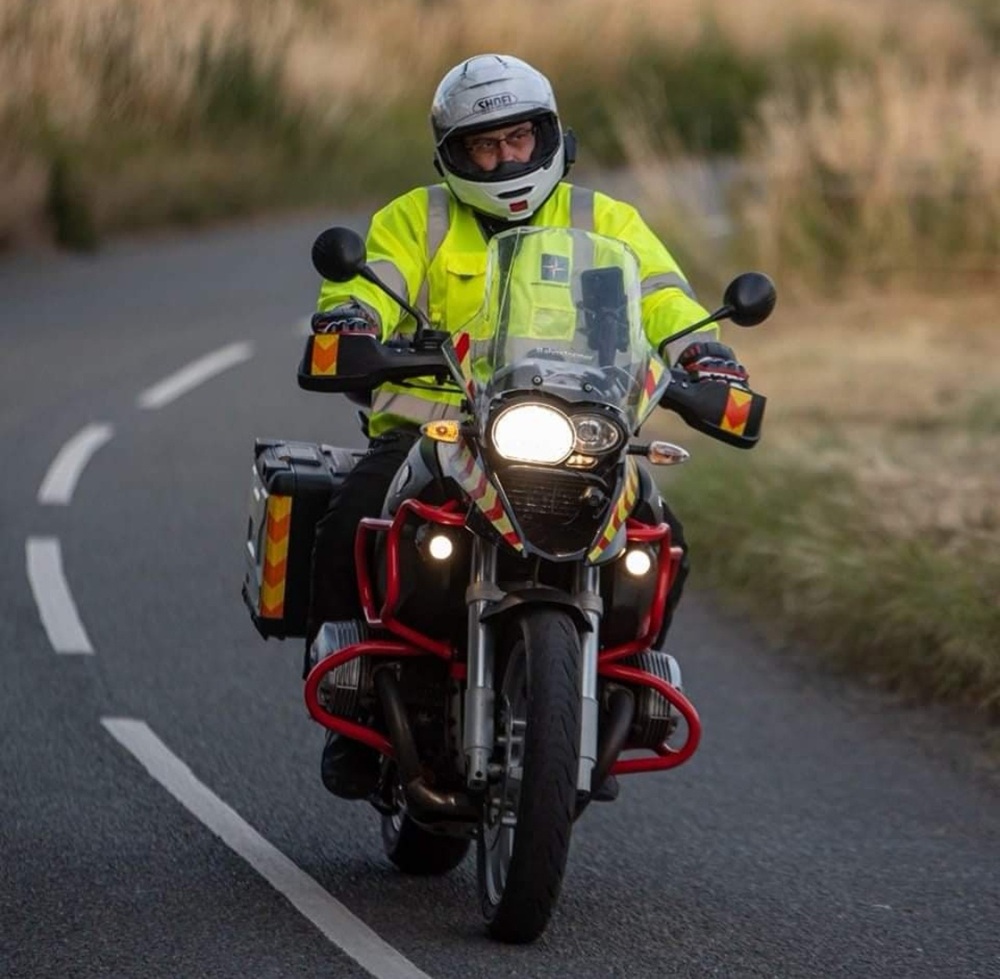
The Two-Second Gap: Creating Space Around Your Motorcycle
Space is one of the most valuable safety resources available to a motorcycle rider.
Maintaining an appropriate following distance gives you more time to observe what is happening ahead and react if the vehicle in front slows suddenly.
A commonly used principle is the two-second gap in good conditions, with a greater distance appropriate when conditions deteriorate.
Rather than simply memorising a number, riders should understand why following distance matters.
If a car ahead suddenly brakes, your motorcycle can cover a surprising amount of road before you have even reacted. Add braking distance to reaction time and the available space can disappear quickly.
A larger gap can also improve observation. Instead of staring at the rear of a vehicle, you may be able to see further down the road and identify developing hazards earlier.
Other vehicles may attempt to enter the space you have created. This can be frustrating, but the solution is generally to rebuild the safety margin rather than become involved in unnecessary conflict.
Tailgating also reduces your options. If the vehicle ahead stops suddenly, there may be insufficient space to respond safely.
Good riders recognise that a gap is not wasted road. It is a buffer that provides time, visibility and flexibility.
Following distance should be increased in rain, darkness, poor visibility, heavy traffic or when the road surface is slippery.
Give yourself space. Space creates time, and time creates options.
Riding in the Rain: Managing Reduced Grip
Wet weather does not automatically mean that motorcycling must stop, but it does require a different approach.
Rain can reduce available tyre grip and increase stopping distances. It can also make road markings, drain covers, metal surfaces and other contaminants more slippery.
The first adjustment should usually be speed. Reducing speed gives you more time to identify hazards and reduces the demands placed on the tyres.
Smoothness is equally important. Sudden braking, acceleration or steering inputs can be more difficult for the tyres to accommodate when grip is reduced.
Visibility can also deteriorate. Rain can obscure your vision, create spray from other vehicles and make it more difficult for other road users to see you.
Following distances should therefore increase.
Pay particular attention to standing water. Even modern motorcycles can become unsettled when travelling through significant amounts of water, especially at inappropriate speeds.
Road surfaces may also become particularly slippery when rain follows a period of dry weather, as accumulated contaminants can mix with water.
Good wet-weather riding is about recognising the changed conditions and adjusting accordingly.
Your motorcycle may still have excellent capability, but your available grip is determined by the interaction between tyres, road surface and conditions.
Advanced riding means respecting those limitations.
Smooth inputs, sensible speed, increased observation and additional space can make wet-weather riding considerably safer.